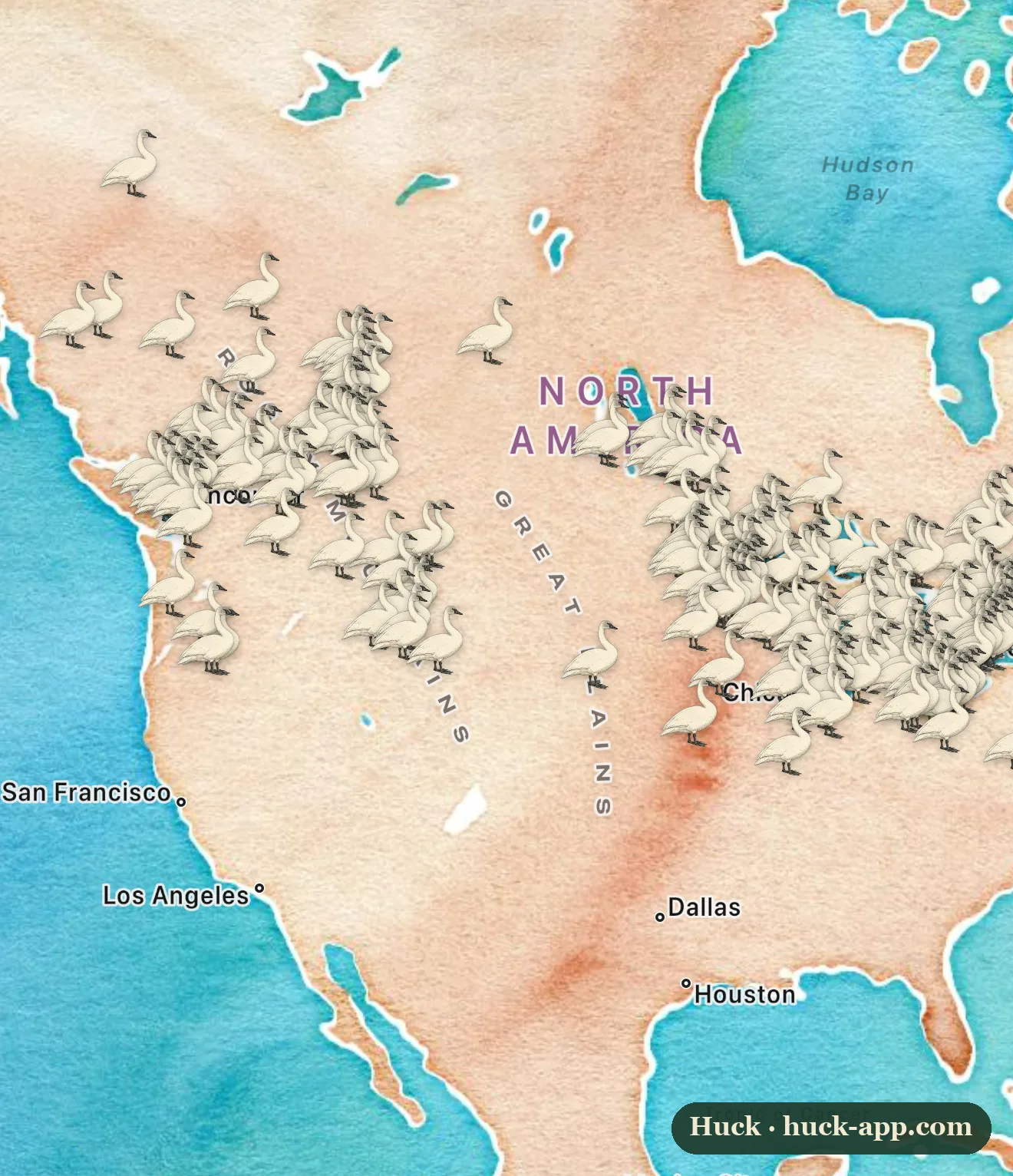
The trumpeter swan is the largest waterfowl in North America, a bright white bird that can weigh more than twenty-five pounds, with wings that spread close to seven feet and a deep, brassy call that gave it its name. In winter they gather by the hundreds and sometimes thousands wherever water stays open. The map shows where they live across the continent, and below are the places to see the big winter crowds.
Where to go
In Washington, the farm fields of the Skagit and Samish flats north of Seattle fill with trumpeters every winter, often mixed with tundra swans and snow geese. In Minnesota, the town of Monticello on the Mississippi has become famous for the swans that winter on the open water there. Hudson, Wisconsin, on the St. Croix River, draws them too. In Idaho and Montana, the Henrys Fork near Harriman State Park and the springs around Red Rock Lakes keep water open through brutal cold. Smaller winter flocks turn up as far south as Arkansas.
When to go
The winter crowds build from late November and peak in December through February, when the cold locks up everything except the rivers and springs the swans depend on. Mornings are the best time, when they are active and calling. Bring binoculars and keep your distance; swans burn a lot of energy in the cold, and flushing them costs them.
Back from 69
Trumpeter swans were hunted for their meat and their feathers, which went into hats, powder puffs, and quill pens, until they had all but vanished. A count in the early 1930s found only 69 in the lower 48, most of them on the high marshes of southwestern Montana, where Red Rock Lakes National Wildlife Refuge was set up in 1935 largely to protect them. Then larger populations turned up in Alaska, and decades of careful restoration across the Midwest and the Rockies followed. A continental survey in 2015 counted more than 60,000. The one stubborn threat left is lead: swans swallow old lead shot and fishing sinkers while feeding in the mud, and lead poisoning still kills them in some of the same places people go to see them.
About the data
This map is built from roughly 45,000 research-grade trumpeter swan observations on iNaturalist, with open coordinates. It shows the whole range, breeding marshes and winter water together, with the biggest clusters where swans and swan watchers concentrate. Population history draws on the US Fish and Wildlife Service and the Trumpeter Swan Society.