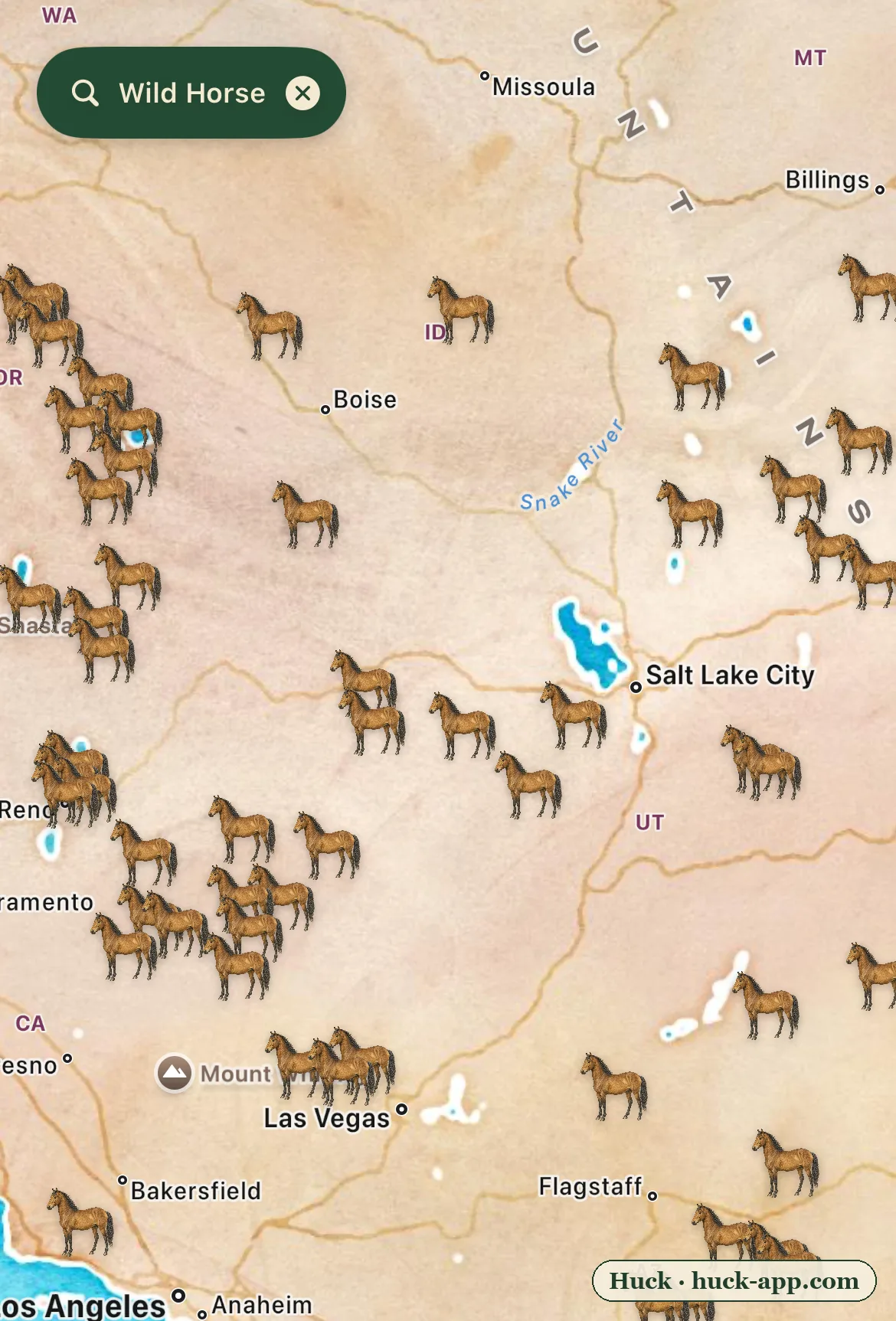
The map above shows wild horse sightings across the American West, and the first thing to know is that it is not evenly wild. That dense band of horses through Nevada and the country around it is the Great Basin, the high sagebrush desert between the Sierra Nevada and the Rockies. Nevada alone holds roughly half of all the wild horses in the United States. Utah, Wyoming, Oregon, Arizona, and Idaho split most of the rest. Federal range managers count more than 70,000 free-roaming horses and burros on western public lands, nearly three times the number those lands are officially set to carry.
A native son, twice over
Here is the part most people do not know: the horse is originally an American animal. The genus Equus evolved on this continent millions of years ago and spread to Asia over the Bering land bridge. Then, around ten thousand years ago, horses vanished from the Americas along with the mammoths and the giant sloths. When Spanish ships brought horses back in the 1500s, they were not introducing a stranger. They were returning a native son, and the descendants of the ones that got away - mesteno, the stray, which English bent into mustang - refilled the empty grasslands their ancestors had left.
The mustang is not an invader. It is a native son that came home after ten thousand years away.
The other wild horse America
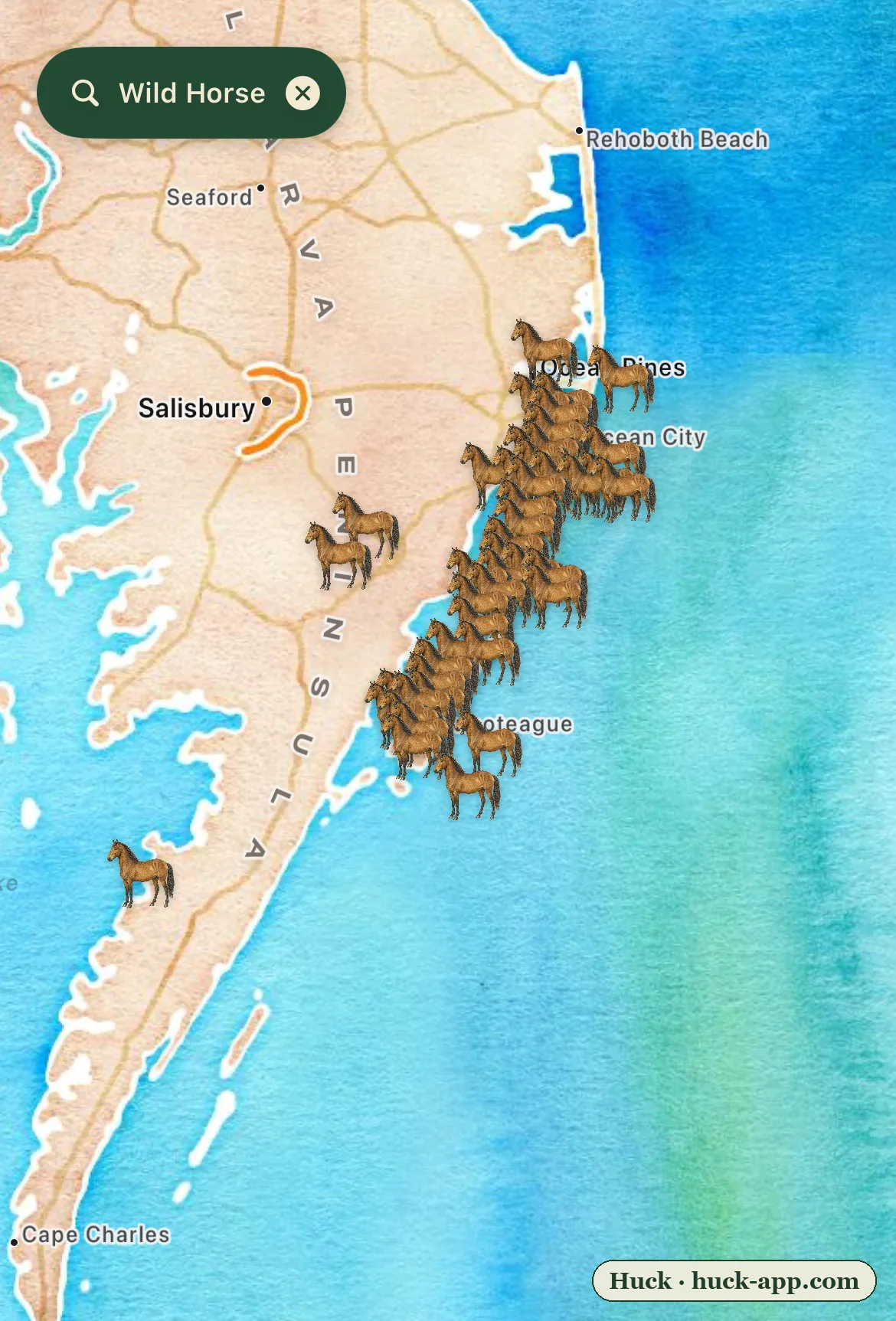
Now look at the East. Map the same species along the Atlantic and almost every pin lands on a single 37-mile barrier island on the Maryland-Virginia line. Assateague Island holds two herds separated by a fence on the state boundary: Maryland’s side is managed by the National Park Service as truly wild, while Virginia’s side belongs, famously, to the Chincoteague Volunteer Fire Company, which swims its ponies across the channel every July in a tradition that predates the fire trucks. Smaller bands hold out on Corolla and Shackleford Banks in North Carolina and Cumberland Island in Georgia: a few hundred animals in total, living on sand and salt marsh.
The island horses are the opposite of the western ones in almost every way. The Great Basin herds live in country so big and empty that most Americans will never see one; the beach herds live yards from vacation rentals and draw millions of visitors. The mustangs number in the tens of thousands and are the subject of one of the hardest management problems in American conservation; the island herds are counted in the dozens and managed down to the individual animal.
Wild, feral, and why it is complicated
Biologists will point out, correctly, that every free-roaming horse in America descends from domestic stock, which makes them feral rather than wild in the strict sense. The law takes a different view: since 1971, the Wild and Free-Roaming Horses and Burros Act, passed by Congress unanimously, has protected them as "living symbols of the historic and pioneer spirit of the West." The tension between those two views - ecological outsider versus returned native and protected symbol - is the entire wild horse debate in miniature, and it plays out over real grass: horse numbers roughly double every four to five years where forage allows, and tens of thousands of gathered animals now live in federal holding rather than on the range.
What the community data shows
The maps in this story are built from roughly 8,000 research-grade community observations of free-roaming horses in the United States on iNaturalist, mapped in Huck. The pattern is lopsided in an interesting way: the Great Basin holds the vast majority of the animals, but the little Atlantic herds generate outsized numbers of sightings because they live where the people are. A tourist on Assateague photographs a pony in the dunes; the mustang band in a remote Nevada valley may go a year without meeting a camera. Community data measures encounters, and the two wild horse Americas encounter people very differently.
About the data
Sightings shown are research-grade community observations from iNaturalist (which counts only free-roaming, not stabled, horses toward research grade), mapped in Huck; counts are as of August 2026. Population figures draw on Bureau of Land Management wild horse and burro program statistics and National Park Service herd counts for Assateague. Coordinates for this species are not obscured.