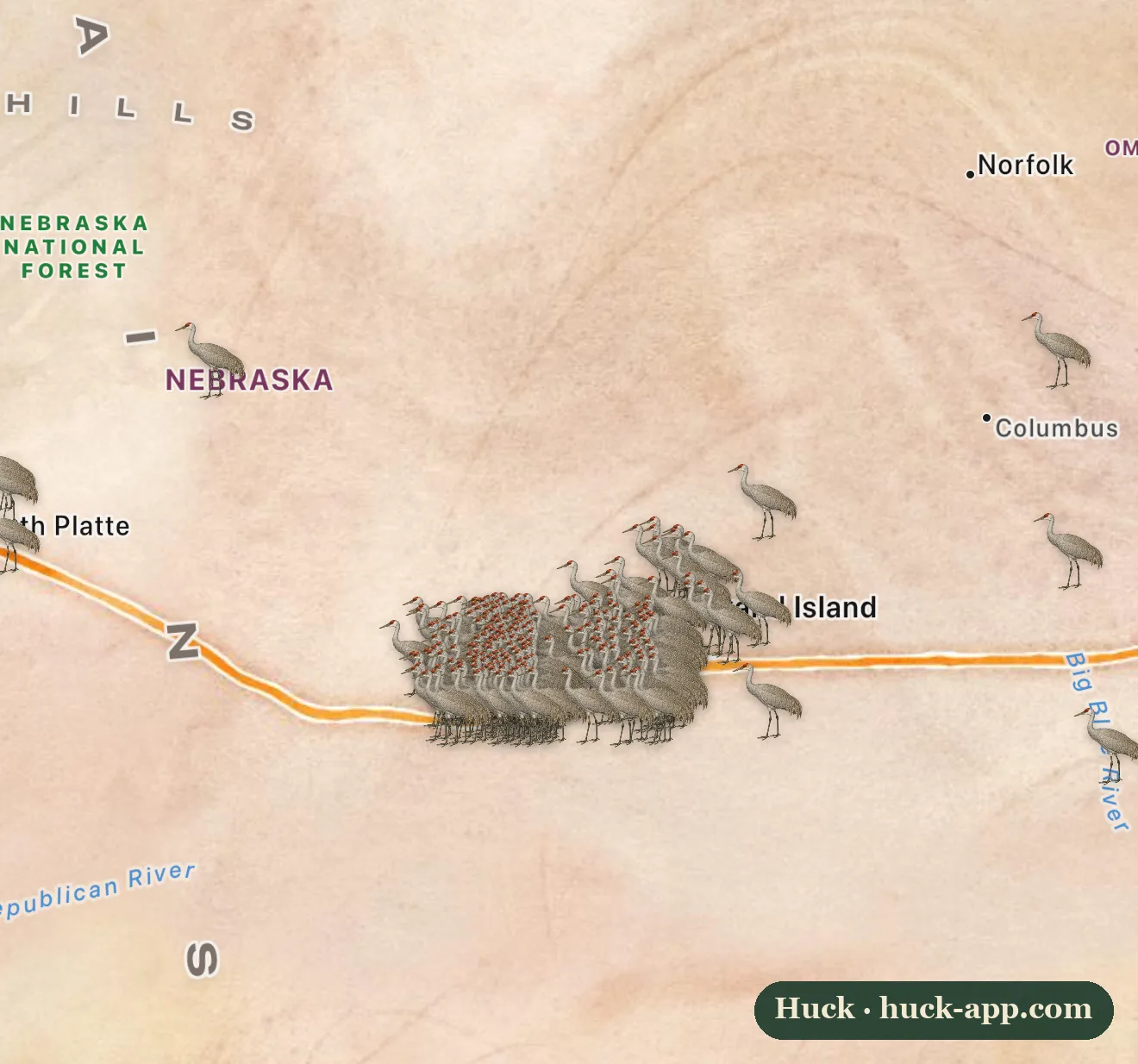
For a few weeks each spring, a short stretch of the Platte River in central Nebraska hosts the largest gathering of cranes anywhere on the planet. Somewhere around a million sandhill cranes, most of the species, stop here on the way north to the Arctic and the northern prairies, and at sunset they pour down onto the river in waves until the sandbars are gray with birds and the air is a roar of bugling. The map shows how tightly they pack onto that one river.
Why this one river
The Platte is wide, shallow, and braided into dozens of channels around low sandbars. Cranes roost at night standing in that shallow water, where a coyote cannot sneak up without splashing, and spend the day in the surrounding cornfields eating grain left from last fall’s harvest. In three or four weeks a crane can put on a fifth of its body weight here, the fuel it needs to finish the trip and start breeding. There is nowhere else on the route that offers both the roost and the food at that scale, so the whole flyway narrows down to this one valley.
Where to watch
The heart of it runs between Grand Island and Kearney along Interstate 80. Audubon’s Rowe Sanctuary near Gibbon runs guided dawn and dusk trips to blinds right on the river, the closest view you can get, and those spots fill up fast once reservations open in winter, so if you want one, book soon. The Crane Trust Nature and Visitor Center near Alda has its own blinds and trails. For free viewing, the old hike-and-bike bridge at Fort Kearny State Recreation Area crosses the river, and county road bridges and public viewing decks along the valley put you over the roosts at sunset. During the day, drive the back roads and you will find cranes dancing in the cornfields.
When to go
Cranes start arriving in late February and peak from about the middle to the end of March, then thin out by mid April. Plan for a weekend in mid to late March if you can. The two moments to be at the river are the last hour before sunset, when the flocks come in to roost, and first light, when they lift off together. Stay in your car or the blinds near the roosts; a crowd on foot can flush tens of thousands of birds.
A river that needs help to stay a crane river
The Platte is not the river it was. Dams and irrigation upstream take much of its water, and without the floods that used to scour it, trees and brush creep onto the sandbars and narrow the channels until the cranes will not roost there. Conservation groups along the central Platte now clear vegetation, buy water, and manage the riverbed to keep it wide and open. The concentration on this map is partly a gift of that work. We mapped the whole crane migration separately, and the cranes’ winter grounds at Bosque del Apache; this is the spring bottleneck in between.
About the data
This map is built from research-grade sandhill crane observations on iNaturalist, mapped in Huck and zoomed to central Nebraska. Most crane records carry open coordinates; a small share are obscured, so a few pins are approximate. Crane counts and river conservation draw on the Crane Trust and Audubon’s Rowe Sanctuary.