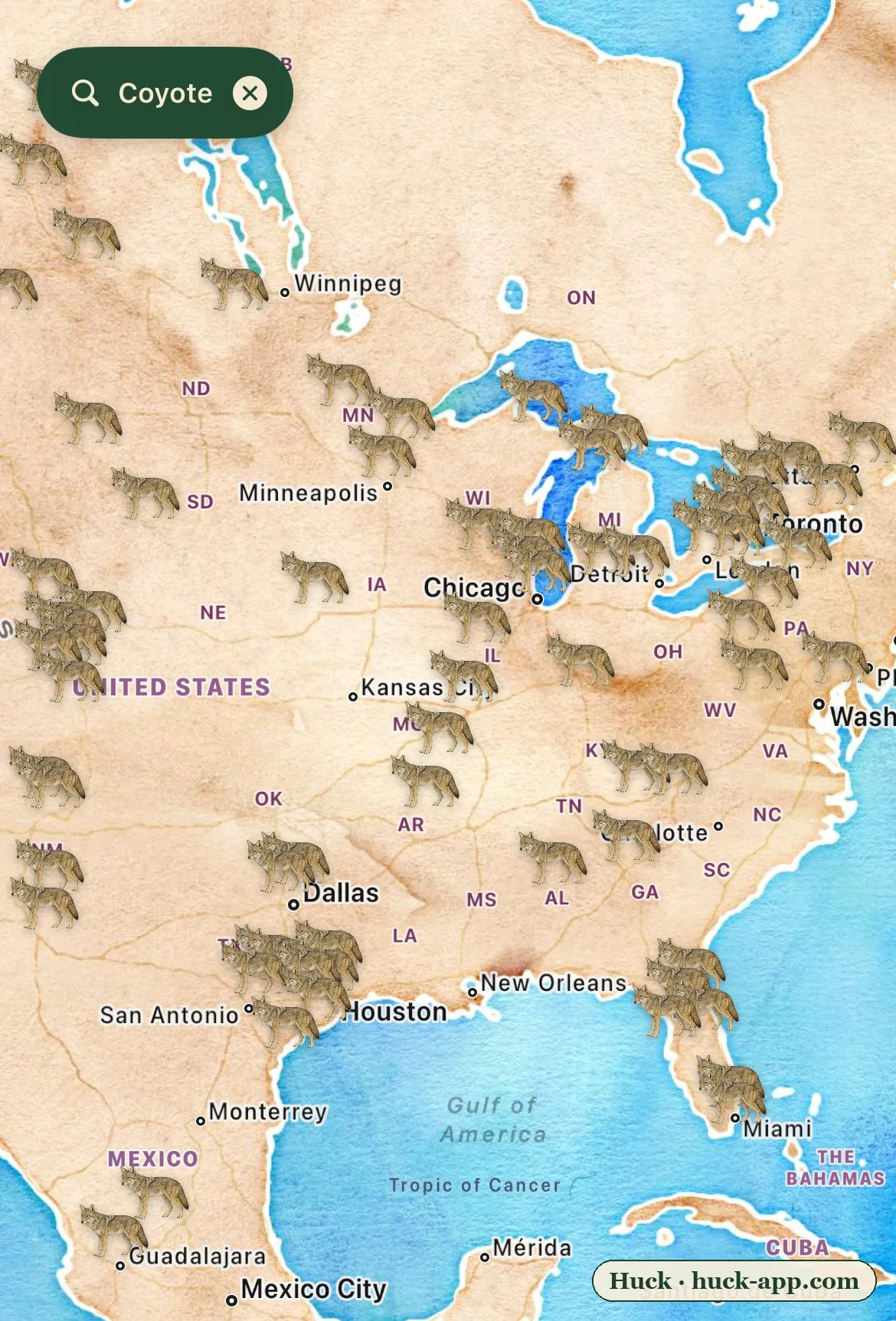
The coyote is the great American success story that nobody roots for. A century ago it was a plains animal, a creature of the open West that most people east of the Mississippi would never have seen. The map above shows where it is now: every mainland state, every major city, coast to coast. It pulled off the largest range expansion of any North American mammal in modern history, and it did it while we were pouring enormous effort into killing it.
How it took the whole country
The coyote spread east because we cleared the way. Wolves keep coyotes out; a wolf pack will kill coyotes on sight, and for as long as wolves ran the eastern forests there was no room. Then we exterminated the wolves, state by state, through the 1800s and early 1900s, and left a continent-sized job opening for a smaller, cleverer, less fussy predator. The coyote took it. By the middle of the twentieth century it had reached the Atlantic, and today there is no state on the mainland without one.
The part-wolf twist
Here is the part most people do not know: the coyote that arrived in the East is not the same animal that left the plains. On the long march through the Great Lakes and southern Canada, it met the last remnant wolves and interbred with them, and less often with domestic dogs. The eastern coyote carries that ancestry today. The best genetic study, of more than 400 animals, found the average northeastern coyote is roughly 64 percent coyote, about a quarter wolf, and around a tenth dog. The wolf shows. Eastern coyotes are noticeably bigger than their western cousins, up to about 45 pounds, with broader skulls and heavier jaws, and they will hunt deer in small packs in a way plains coyotes rarely do.
You will hear this animal called a coywolf. It is a great word and it is half right. Biologists argue about it, because there is no single clean coyote-wolf hybrid: the mix varies a lot from animal to animal, and some eastern coyotes carry almost no wolf at all, so most researchers simply call it the eastern coyote. But the wolf in its family tree is real, and it is part of why the one trotting through your neighborhood looks less like a scrawny desert jackal and more like a small, confident wolf.
Yes, in your town
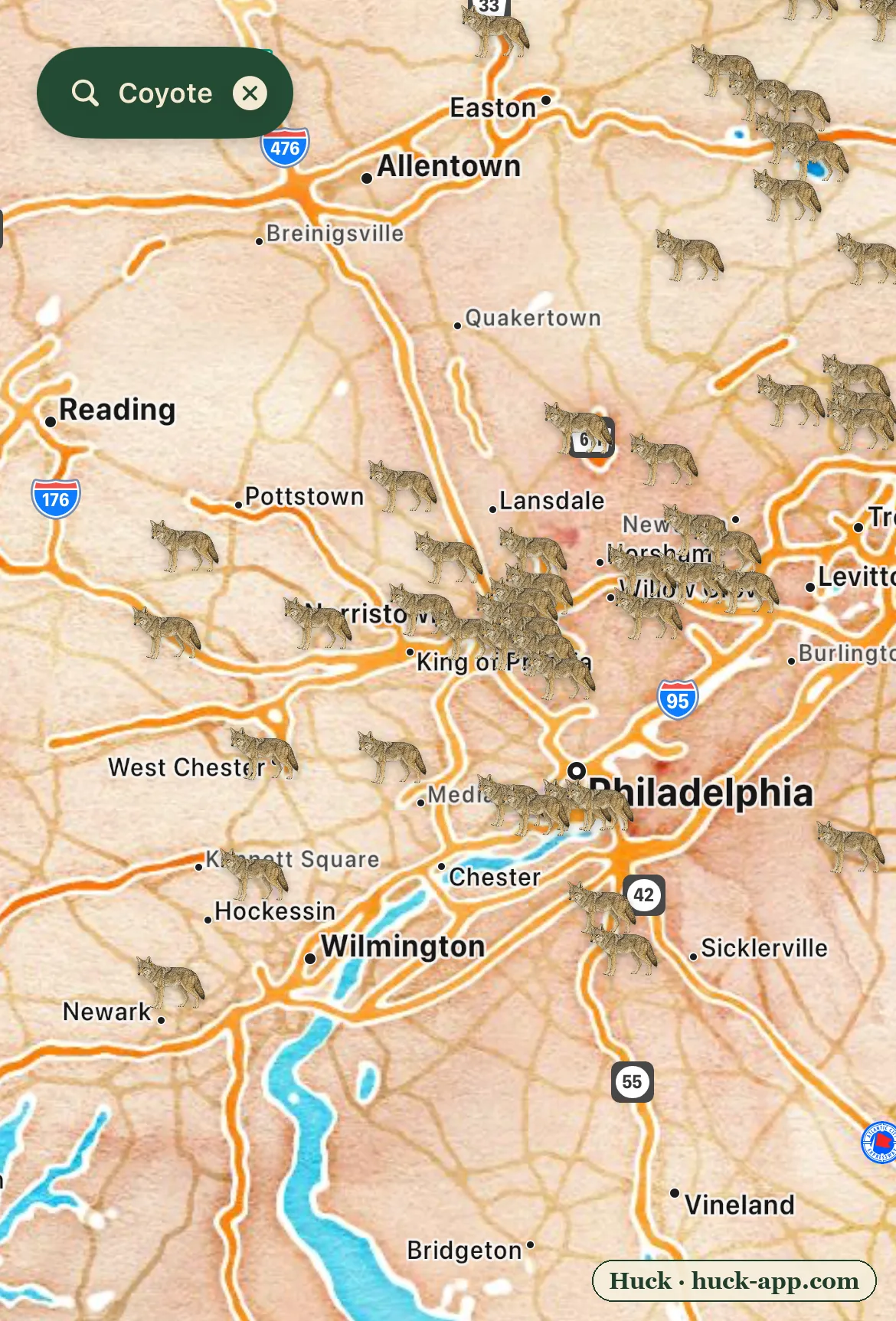
Zoom into any metro and the pattern holds. Coyotes live inside every major American city now, downtown included; Chicago has had radio-collared coyotes trotting through the Loop for two decades. They den in golf courses, cemeteries, drainage culverts, and the wooded strips behind subdivisions, and most of the time you will never know they are there, which is exactly how they prefer it. The animal is built to live at the edges of us, quietly, on rats and rabbits and fallen fruit and whatever we leave out.
About the bold ones
So what about the coyote that stops being shy, the one that lingers on a lawn or follows a dog walker and ends up in the local news? Almost always, a coyote that has lost its fear of people has been taught to lose it, by being fed, whether on purpose or through unsecured trash, pet food left on porches, and small pets left out at night. The fix is the opposite of feeding: haze it. If a coyote holds its ground or approaches, make yourself big, wave your arms, and be loud, and it will relearn that people are to be avoided. Keep cats indoors and dogs leashed at dawn and dusk. A coyote that fears you is a good neighbor. One that has learned you mean food is the one that becomes a headline. The animal is rarely the problem. The habituation is.
What the community data shows
This map is built from more than 113,000 research-grade coyote observations on iNaturalist, and unlike the threatened animals we usually map, the coyote’s locations are wide open, which makes this the densest and most honest map on this blog. It reflects where people and phones are as much as where coyotes are, but the picture matches what wildlife biologists have documented for decades: the coyote is everywhere, it is here to stay, and there is no putting it back in the West.
About the data
Sightings shown are research-grade community observations from iNaturalist, mapped in Huck; counts are current as of August 2026, and coyote coordinates are not obscured. Ancestry figures come from published genomic work on eastern coyotes, notably Monzón and colleagues’ analysis of coyote, wolf, and dog admixture across the northeastern United States.