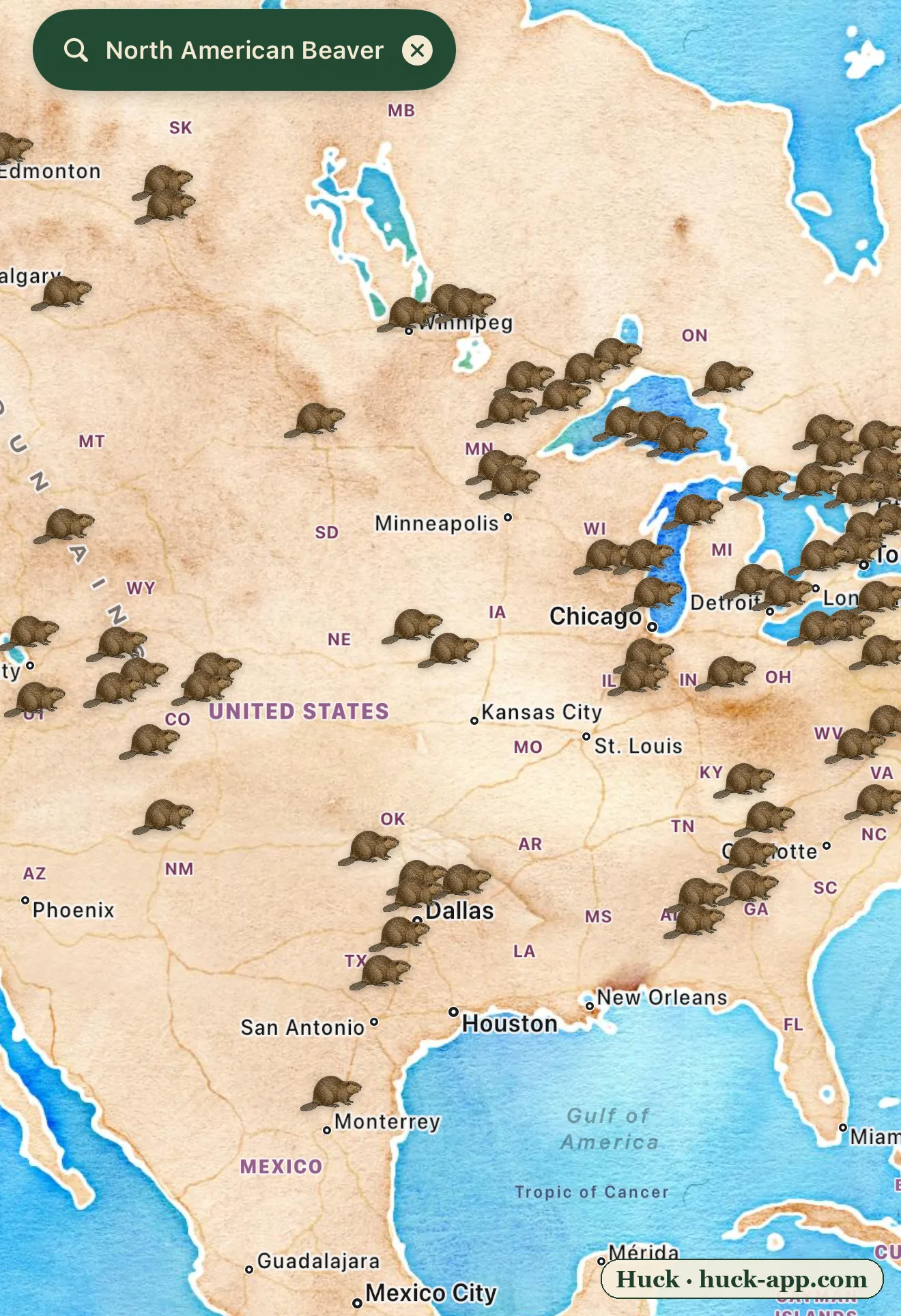
We almost erased the beaver, and in doing so we deleted one of the most useful animals on the continent without ever noticing what it did. The map above shows it back, in nearly every watershed from Canada to Mexico. What changed is not the beaver. It is that we finally figured out what it builds.
Not a rodent, a public-works department
Most animals adapt to their environment. The beaver rebuilds it. A single dam turns a thin, fast stream into a staircase of ponds and wetlands, raises the water table, spreads water out across the floodplain, and hands habitat to hundreds of other species, from fish and frogs to moose and migrating birds. Biologists call it a keystone species and an ecosystem engineer, which is a formal way of saying a beaver behaves less like a rodent and more like a municipal water authority.
The erasure we forgot happened
Before Europeans arrived, somewhere between one hundred and four hundred million beavers plumbed the continent, and the land was far wetter and spongier for it. Then came the fur trade. By 1900, trapped out for felt hats, beavers had crashed to perhaps a hundred thousand animals, and the countless wetlands they maintained drained and disappeared with them. It was one of the largest landscape changes in North American history, and almost no one alive witnessed it as it happened. Beavers have since clawed back to an estimated ten to fifteen million.
The animal that will not burn
Here is what turned the beaver from pest to asset. Researchers studying wildfire noticed something strange in the burn scars: the green, waterlogged corridors around beaver ponds often refused to burn, surviving as lush islands in a sea of scorched black. One study found that beaver-engineered stream reaches stayed roughly three times greener through wildfire and drought than stretches without them. By flooding and irrigating the land around their dams, beavers accidentally build firebreaks, and they maintain them for free, every day, forever.
And the animal that stores water
The same dams are drought insurance. They hold spring runoff back and release it slowly, keeping streams flowing deep into dry summers, recharging groundwater, and filtering sediment and pollutants before they move downstream. In an increasingly hot and flammable West, that is precisely the infrastructure agencies spend billions of dollars and decades of concrete trying to build. A beaver does a version of it for the cost of the willow it chews.
Putting them back on purpose
So a thing is happening now that would have baffled a 1900 trapper: states, tribes, ranchers, and federal agencies are deliberately bringing beavers back, and where beavers are still missing, building beaver dam analogs, cheap human-made imitations of a beaver dam, to jump-start the same process until the real animals move in. It has become some of the least expensive and most effective water and fire work available, done by an animal we were paying to exterminate a lifetime ago.
The honest catch
Beavers are not tidy infrastructure. They flood culverts, roads, timber, and farm fields, and they are still routinely killed as nuisances, sometimes on the very landscapes where a different agency is paying to reintroduce them. The future of the beaver is less a question of biology than of tolerance: whether we are willing to live with the flooding that comes bundled with the firebreaks and the water. The animal already knows how to do the work. The open question is us.
What the community data shows
This map is built from roughly 67,000 research-grade beaver observations on iNaturalist, with open coordinates, spread across nearly every watershed on the continent and thinning only in the true deserts. Sightings track where people are too, but the shape is the story: an animal we nearly deleted is back at continental scale, arriving right as we work out that we needed it all along.
About the data
Sightings shown are research-grade community observations from iNaturalist, mapped in Huck; counts are current as of August 2026, and beaver coordinates are not obscured. Population history and the fire and drought findings draw on published research on beaver ecosystem engineering, including work on beaver-dammed corridors resisting wildfire, and on low-tech, process-based stream restoration using beaver dam analogs.